
Proudly Serving the Rock Hill, Charlotte, and Surrounding Areas

Who Is Responsible for Sewer Line Repair: Me or the City of Charlotte?
Full Guarantee, Full Service, Full Spectrum Plumbing.
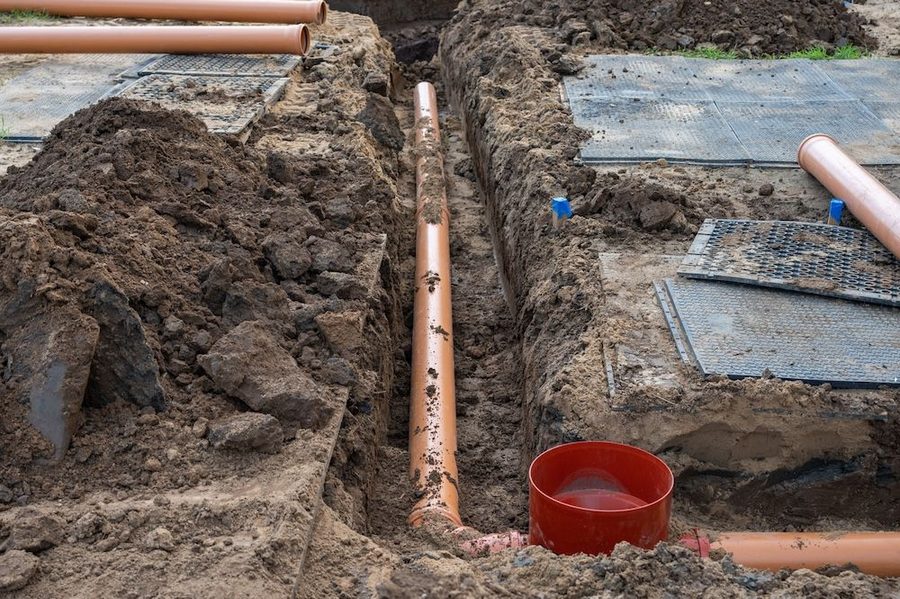
If your sewer line backs up unexpectedly, one of the first questions you are likely asking is: “Am I about to pay for this myself?”
And in Charlotte, that question can quickly turn into a stressful and expensive situation. Many homeowners assume the city handles any sewer issue outside the house. Then they discover, often after a backup, excavation quote, or emergency plumbing visit, that they may actually be responsible for thousands of dollars in repairs.
The problem is that sewer responsibility lines are not always obvious. Easements, right-of-way boundaries, low-pressure sewer systems, and even recent city construction can all affect who pays for what.
At Full Spectrum Plumbing Services, we have performed countless sewer inspections and regularly help homeowners throughout Charlotte and Rock Hill diagnose sewer problems and determine whether the issue falls on private property or public infrastructure.
By the end of this guide, you’ll understand where homeowner responsibility typically begins, when Charlotte Water may become responsible, and what steps to take before approving expensive sewer repairs.
Quick Answer
In Charlotte, homeowners are generally responsible for the sewer lateral running from their house to the street right-of-way, while Charlotte Water maintains the public sewer main. Exceptions may apply for easements, city-caused damage, and certain infrastructure configurations.
However, there are important exceptions involving:
-
utility easements
-
low-pressure sewer systems
-
city-caused damage
-
infrastructure located beyond the right-of-way
Getting this wrong can cost homeowners thousands of dollars in unnecessary repairs or delays.
One of the biggest misconceptions is that the city automatically handles every sewer issue outside the foundation of the house. In Charlotte, that usually is not the case. According to Charlotte Water’s published guidance, your responsibility for the sewer pipe begins, as a rule of thumb, at the street right-of-way. Charlotte Water maintains the mains under public streets. But their guidance also explicitly states that exceptions may apply.
When something goes wrong with a sewer line, most homeowners do not know where to look or who to call. Some assume the city handles everything outside the house. Others spend thousands on repairs that may not have been their responsibility. Getting this wrong in either direction is costly.
In this guide, you will learn:
-
Where Charlotte Water draws the responsibility line
-
Which sewer line exceptions homeowners need to know
-
The warning signs of sewer lateral failure
-
What sewer repairs typically cost in Charlotte
-
When to call Charlotte Water instead of a plumber
What Is a Sewer Lateral?
A sewer lateral is the underground pipe that carries wastewater from your home to the public sewer main beneath the street.
In most Charlotte neighborhoods, the sewer lateral runs:
-
from your home’s plumbing system
-
through your yard
-
to the street right-of-way
-
where it connects to Charlotte Water’s public sewer system
The key issue is determining where your private responsibility ends and where Charlotte Water’s responsibility begins.
Where Charlotte Homeowner Sewer Responsibility Usually Begins
Charlotte Water (CLTWater, formerly CMUD) manages the public water and wastewater system for Mecklenburg County. Their published policy generally states:
-
Homeowners are responsible for water pipes starting at the tailpiece of the meter.
-
Homeowners are responsible for the wastewater pipe beginning at the street right-of-way.
Put simply:
-
The sewer lateral running from your home through your yard is usually your responsibility.
-
The public sewer main beneath the street is usually Charlotte Water’s responsibility.
Sewer Responsibility: General Rule in Charlotte
Homeowner Responsibility
-
All drain lines and plumbing inside the home
-
Plumbing fixtures and appliances
-
The cleanout access point near your foundation
-
The private sewer lateral running through your yard
-
The pipe up to the street right-of-way boundary
Charlotte Water Responsibility
-
Water and wastewater mains beneath public streets
-
Manholes and sewer access infrastructure
-
The water meter, yoke assembly, and meter box
-
Pump stations and treatment infrastructure
-
Pipes within recorded CLTWater easements*
* Easement exceptions may apply. See below.
The right-of-way is not always the same as your property line. In many older Charlotte neighborhoods with deep setbacks, your sewer lateral may run 60 to 80 feet before reaching the public right-of-way. Under the standard rule, all of that pipe is generally the homeowner’s responsibility.
Low-Pressure Sewer Systems (LPSS)
Homes with basements, near the lake, or that don’t have enough downhill slope to the city sewer connection may be connected to a low-pressure sewer system instead of a traditional gravity sewer line.
These systems use pumps and other infrastructure, and maintenance responsibilities can differ significantly from those of standard sewer laterals.
It is generally the homeowner’s responsibility to maintain the pump and pipe running to the city right-of-way.
Exceptions to Charlotte Sewer Line Responsibility Rules
Charlotte Water does not present sewer responsibility as a single universal rule. Their guidance specifically notes that exceptions exist.
These are the most common situations where responsibility may change.
CLTWater Easements on Your Property
If Charlotte Water holds a permanent utility easement across your property, the pipe inside that easement corridor may be maintained by Charlotte Water even though it physically sits on your land.
Before authorizing excavation:
-
Check your property survey.
-
Review your deed.
-
Verify whether a recorded sewer easement exists.
Damage Caused by City or Utility Construction
If Charlotte Water or a municipal road crew damaged your sewer lateral during excavation or construction work, you may have grounds for a claim.
Documentation matters here.
Before any independent repair work begins:
-
Photograph the damage.
-
Obtain camera footage.
-
Report the issue immediately.
Once repairs begin, it becomes much harder to prove where the damage originated.
Irrigation System Backflow Devices
Homes with irrigation systems often include a backflow prevention device.
Charlotte Water typically maintains the meter assembly itself, but the backflow device and downstream plumbing are usually the homeowner’s responsibility.
Knowing which side of the meter the problem exists on matters during troubleshooting.
What to Do Before Approving Sewer Repairs in Charlotte
Before approving excavation or sewer replacement:
-
Get a sewer camera inspection if possible.
-
Verify whether your property contains a CLTWater easement.
-
Contact Charlotte Water if the issue may involve public infrastructure.
If Charlotte Water confirms the problem is within their infrastructure, the repair may become their responsibility instead of yours.
Getting that determination documented can save thousands of dollars.
Why Charlotte Sewer Laterals Fail
Understanding why sewer lines fail helps homeowners recognize problems early and avoid emergency backups.
Piedmont Clay Soil
Charlotte’s Piedmont region contains dense clay soil that expands when wet and contracts during dry periods.
That constant movement stresses sewer pipe joints over time, especially in older clay tile systems. Once joints crack, tree roots enter the pipe, and deterioration accelerates.
Aging Pipe Materials
Many homes built before 1980 in neighborhoods like:
-
Dilworth
-
Myers Park
-
Plaza Midwood
-
Villa Heights
still contain original clay tile or Orangeburg sewer pipe.
Orangeburg was never designed to last 60–75 years, and many of those systems are now deforming or collapsing underground.
Tree Root Intrusion
Charlotte’s mature tree canopy is beautiful, but it is also a leading cause of sewer lateral damage. Roots from:
-
water oaks
-
willow trees
-
sweet gums
actively seek moisture and enter sewer pipes through tiny cracks or failed joints. Over time, tree roots expand until they completely obstruct the flow.
Long Sewer Lateral Runs
Older Charlotte neighborhoods often have large lots with long setbacks from the street.
A sewer lateral may run 80 feet or more before reaching the public main. More underground pipe means more potential failure points, greater root exposure, and higher replacement costs.
Signs Your Charlotte Sewer Lateral May Be Failing
Several warning signs appearing together strongly suggest it is time for a sewer camera inspection.
Multiple Drains Backing Up at the Same Time
When multiple fixtures back up simultaneously, the issue is rarely an isolated clog.
This usually indicates a blockage or failure somewhere in the main sewer lateral.
A sewage backup inside the home is a health hazard and can cause significant property damage.
Gurgling Sounds in a Toilet
If your toilet gurgles when:
-
The washing machine drains
-
Another sink runs
-
A shower empties
Air is likely trapped in the plumbing system due to a blockage in the main sewer line.
Sewage Odors Indoors or in the Yard
A strong sewage smell inside the home or near the sewer cleanout often indicates that wastewater or sewer gases are not venting properly.
This can happen when:
-
Sewer lines crack
-
Blockages trap waste
-
Wastewater leaks underground
Soft, Wet, or Bright Green Areas in the Yard
If part of your lawn stays unusually:
-
soggy
-
soft
-
bright green
During dry weather, leaking wastewater may saturate the surrounding soil.
Repeated Main Line Snaking
If the main sewer line has needed repeated snaking within the past couple of years, the issue may be structural rather than a simple clog.
Sluggishly Draining Toilets
Slow toilets without a visible bowl clog often indicate restrictions farther down the sewer lateral.
The obstruction may be developing well beyond the fixture itself.
What to Do Before Calling Anyone
Taking the wrong first step can cost money unnecessarily.
Get a Camera Inspection Before Anything Else
A sewer camera inspection is usually the most important first step.
The inspection:
-
identifies the exact problem
-
shows the failure location
-
determines whether the issue falls on private or public infrastructure
That information determines everything else.
Full Spectrum Plumbing serves Charlotte and Rock Hill and can often perform same-day sewer camera inspections.
Check Your Property for Easements
Review:
-
your property survey
-
Mecklenburg County GIS records
-
your deed documentation
If a CLTWater easement crosses your property, the affected sewer line may not be your responsibility.
Do not authorize excavation until you understand what easements exist.
Contact Charlotte Water if the Problem Is Beyond the Right-of-Way
If camera footage confirms the failure is on the city’s side of the right-of-way:
-
Call Charlotte Water at (704) 336-7600
-
or dial 311
Bring documentation and camera footage whenever possible.
Video evidence makes these conversations much more productive than verbal symptom descriptions alone.
What Sewer Line Work Costs in Charlotte
Sewer repair pricing varies significantly depending on:
-
pipe depth
-
access conditions
-
pipe material
-
total linear footage
-
concrete or landscaping disruption
Typical Sewer Repair Price Ranges in Charlotte
Sewer Camera Inspection
Typical Cost: Around $199–$500
Shallow Spot Repair
Typical Cost: $1,700–$4,344
Full Sewer Lateral Replacement
Typical Cost: $1,700–$8,950+
Main Line Clearing or Jetting
Typical Cost: $334–$1,281
Cleaning does not solve structural sewer pipe failures. The single biggest cost factor in sewer repair is depth. A pipe buried 2 feet deep in open soil is dramatically less expensive to repair than one buried 6 feet deep beneath a concrete driveway.
Anyone who gives final sewer pricing without an on-site assessment is guessing.
For older Charlotte homes with original clay or Orangeburg pipes, a full replacement with modern PVC is often less expensive in the long run than repeatedly patching a failing system.
Where These Charlotte Sewer Repair Costs Come From
One important note about sewer repair pricing: the figures shown here are based primarily on actual sewer repair projects completed in the Charlotte area, along with local contractor pricing and regional market data.
We intentionally avoid relying solely on national pricing databases and lead-generation websites.
Many national home-service websites publish broad cost ranges that are often based on outdated data or nationwide averages designed to attract search traffic and generate quote requests. In many cases, those companies sell your information to multiple contractors after you submit your details. The pricing shown on those sites is often based on information that may not accurately reflect Charlotte’s soil conditions, permitting requirements, labor costs, or utility infrastructure in today’s market.
Charlotte sewer repair costs can vary significantly from national averages because factors such as clay soil conditions, pipe depth, mature tree root systems, long sewer lateral runs, and older neighborhoods all influence the complexity of repairs.
For that reason, the ranges provided in this guide are intended to reflect what homeowners are more likely to encounter in the Charlotte market rather than broad national estimates.
The only way to determine an exact sewer repair cost is through an on-site evaluation, camera inspection, and assessment of the specific conditions affecting your property.
When to Call Charlotte Water Instead of a Plumber
There are situations where Charlotte Water should be your first call.
Multiple Homes Are Backing Up Simultaneously
If neighboring homes are also experiencing sewer backups, the issue likely involves the public sewer main rather than your private lateral.
Sewage Is Surfacing in the Street or Near a Manhole
Wastewater emerging from:
-
manholes
-
street drains
-
public right-of-way areas
Typically points to a municipal sewer system issue.
Recent City Construction Happened Nearby
If sewer problems began shortly after:
-
road work
-
utility excavation
-
Charlotte Water construction
The timing may not be coincidental. Document everything before repairs begin.
A Camera Inspection Confirms the Problem Is Beyond the Right-of-Way
If footage clearly shows the failure is within Charlotte Water infrastructure, contact them before authorizing private repairs.
Your Property Contains a Recorded CLTWater Easement
Pipes located within official utility easements may fall under Charlotte Water’s responsibility, even if they are physically located on private property.
Charlotte Water responds 24 hours a day, and documentation significantly reduces disputes about responsibility.
The Catch: Why You Need a Street-Side Cleanout for City Service
Even though Charlotte Water is responsible for the sewer main and the lateral in the public right-of-way, many homeowners run into a practical hurdle.
This is where the right-of-way cleanout comes into play.
A cleanout is a capped pipe sticking up from the ground that provides direct access to the underground sewer line.
Charlotte Water will often refuse to service the line until a cleanout is installed. Their equipment requires a safe, accessible entry point near the right-of-way. If a severe blockage occurs in the city’s portion of the pipe and you lack the street-side access point, you may have to hire a private plumber to install a cleanout before the city can help.
Once the cleanout is installed, Charlotte Water can typically take over maintenance on the public side of the line.
Confused About Your Sewer Line? Let Full Spectrum Plumbing Help
At the end of the day, sewer line responsibility in Charlotte is not always as simple as “homeowner vs. city.” Easements, right-of-way boundaries, low-pressure sewer systems, and infrastructure access points can all change who is responsible for repairs.
If you are dealing with backups, slow drains, sewage odors, or recurring sewer problems, the most important step is determining exactly where the failure is located before approving excavation or replacement work. Making assumptions about responsibility before identifying the problem can lead to unnecessary repairs, delays, and thousands of dollars in avoidable costs.
A sewer camera inspection is often the difference between paying for a repair yourself and discovering the issue may actually fall under Charlotte Water’s responsibility.
At Full Spectrum Plumbing Services, we help homeowners throughout Charlotte and Rock Hill diagnose sewer line problems, review camera footage, and determine the smartest next steps before major repair costs begin.
Your next step is getting the problem properly identified before making assumptions that could cost thousands. Contact us today to schedule your sewer service.
Recent Posts
Is Your Plumbing Ready for a Charlotte Winter? A Fall Checklist

How Much Does Well Pump Replacement Cost? What Homeowners Should Know
When Should Rock Hill Homes Use Hydro Jetting Instead of Standard Drain Cleaning?
Have a Question?
Fill out this form and our team will get back to you as soon as possible.
Book Online in minutes
Schedule service for your home Today
Schedule service with Full Spectrum Plumbing today and take the stress out of home repairs. Our experienced team is ready to deliver fast, reliable solutions whenever you need us.