
Proudly Serving the Rock Hill, Charlotte, and Surrounding Areas

Tankless vs. Conventional Water Heater: An Honest Comparison for Charlotte Homeowners
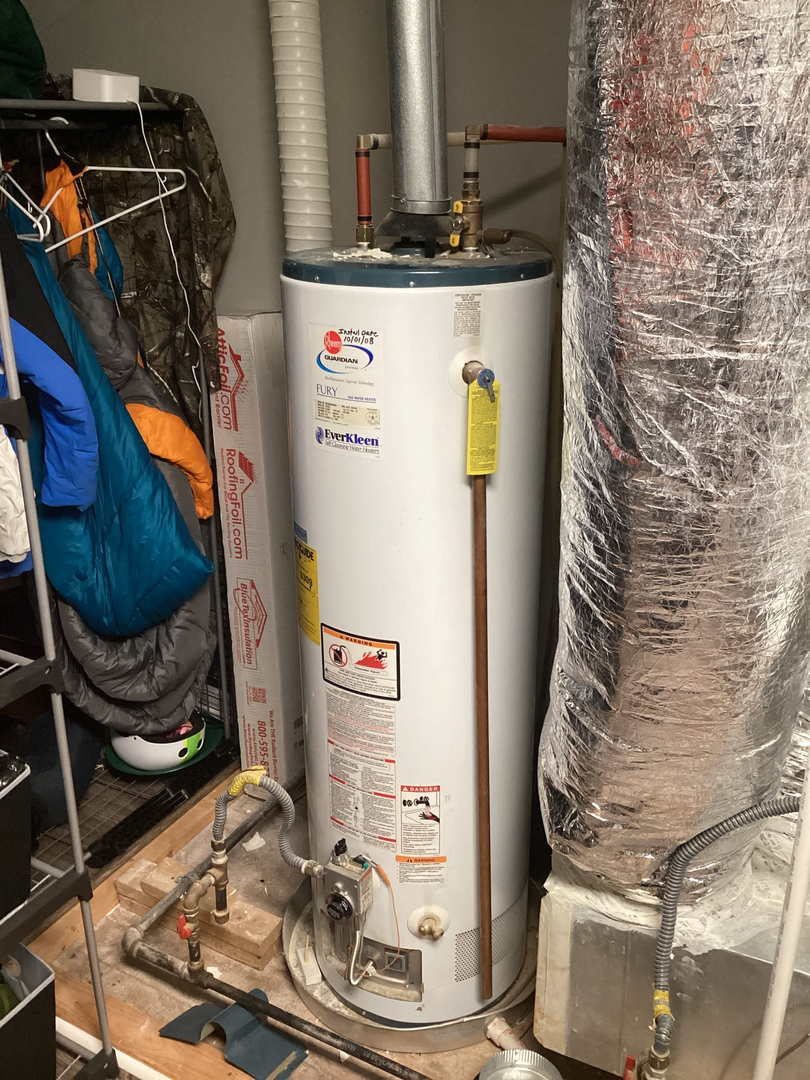
A conventional tank water heater costs less upfront. A tankless unit usually runs 2x-3x more than a standard water heater. Tankless systems cost more upfront, but they may be the smarter long-term buy for many Charlotte families. Here’s exactly when it is, and when it isn’t.
What You’ll Learn in This Article
You’re replacing a water heater, or planning ahead, and you’ve heard “go tankless.” But nobody has told you the full story: the real price difference, the honest downsides, and which one actually makes sense for your home. If you’ve been told ‘just go tankless,’ you’re missing about half the story, and it could cost you thousands.
How We Got These Numbers
Full Spectrum Plumbing operates in Mecklenburg and York Counties every day. The prices in this article are based on jobs that were completed right here in Charlotte. We’re not using an outdated national database; these are actual installed costs, including all labor, permits, and materials, with your old unit recycled at no extra charge.
The Side-by-Side Comparison
| Traditional | Tankless | |
|---|---|---|
| Energy Efficiency | Standard | High (heats only on demand) |
| Hot Water Supply | Limited by tank size | Continuous |
| Footprint | Large (floor-standing) | Small (wall-mounted) |
| Lifespan | 8–12 years | 15–20+ years |
| Tank Warranty (Standard) | 6 years | 6-year heat exchanger |
| Parts + Labor Warranty | 2 years (better warranties available) | 2 years |
| Care Club Fixture Warranty | Manufacturer | Manufacturer |
| Lifetime Care Club Warranty | Lifetime | Lifetime |
Financing is available for qualified homeowners with approved credit (O.A.C.).
How Each System Works
Conventional Tank
A conventional water heater always stores 40 to 50 gallons of hot water. A burner or heating element keeps that water at your set temperature, whether you need it or not.
When you turn on the shower, hot water flows out of the tank. When the tank runs out of hot water, you wait for it to refill and reheat. That’s called “recovery time.”
That constant reheating, even at 2 a.m., is called standby heat loss. It’s one of the biggest reasons water heaters account for roughly 14–18% of most household energy bills.
The Tankless Unit
A tankless water heater has no storage tank. It sits on your wall and fires up the moment you turn on the hot tap. Cold water passes through a heat exchanger, gets heated on the spot, and delivers a continuous stream of hot water.
The moment you turn off the tap, the unit shuts down. No standby heat loss.
The Honest Pros and Cons
Conventional Tank: What’s Good
- Lower upfront cost. At a cost of 2-3 times less, it’s the more accessible option.
- Simple technology. Fewer electronic components mean fewer things that can malfunction.
- Fast replacement. Most swaps can be done by a professional in 3-5 hours.
- Good fit if you’re selling soon. If you’re moving in under a year, the economics don’t favor a tankless upgrade.
Conventional Tank: The Downsides
- Runs out of hot water. If you have a large family or back-to-back showers, you may eventually hear complaints.
- Higher energy bills over time. You’re paying to keep water hot around the clock.
- Shorter lifespan. Expect 8–12 years before you’re back here making this decision again.
- Bigger footprint. In smaller Charlotte homes with tight utility closets, a 50-gallon tank takes up real space.
Tankless: What’s Good
- Continuous hot water. It doesn’t run out. No cold showers after the kids finish their baths.
- Lower energy bills. Because it only heats water on demand, most homeowners see meaningful savings on monthly gas or electric costs.
- Longer lifespan. A well-maintained tankless unit routinely lasts 20 years or more.
- Space savings. Wall-mounted units free up floor space in your utility room or garage.
- Meets current EPA requirements. This matters for resale value and future code compliance.
Tankless: The Downsides (And We Won’t Hide Them)
- Higher upfront cost. At 2-3 times more, this is a real financial decision, not an impulse buy.
- Possible gas line upgrades. High-output gas tankless units sometimes require a larger gas line. We’ll tell you upfront if that’s needed.
- Hard water is an issue. Charlotte’s supply draws from Lake Norman and Mountain Island Lake and carries minerals that can build up in a tankless heat exchanger over time. Annual descaling maintenance is essential in this area.
- Slight delay at the tap. Because the unit fires on demand, some homeowners notice a brief wait for hot water to arrive at a distant fixture. An upgraded unit with a recirculation pump eliminates this.
- More complex repairs. Tankless units have circuit boards, flow sensors, and gas valves. When something goes wrong, the repair is more involved than a standard tank fix.
Who Tankless is NOT a Good Fit For
Be honest with yourself here:
- You’re moving in the next 1–2 years.
- You have a tight budget and cannot finance the difference.
- You’re unwilling to perform annual maintenance (descaling) in our hard-water market.
- Your home is on a slab and has older gas lines that would require significant upgrades.
If any of these describe your situation, a high-efficiency conventional tank is the right call. It’s not a lesser choice, it’s the smarter one for your circumstances.
Who Tankless IS a Great Fit For
- You have 3 or more people in your home, and hot water arguments happen.
- You plan to stay in your home for 5 or more years.
- You care about energy efficiency and lower utility bills.
- You want to free up space in a cramped utility area.
- You want the option for a recirculation unit for nearly instant hot water at the tap.
The Charlotte Factor: Hard Water and the Catawba Basin
This is something most blogs won’t tell you. Charlotte water typically isn’t very hard. But mineral deposits, primarily calcium and magnesium, will still accumulate inside a tankless heat exchanger. Left unchecked, this reduces efficiency and eventually causes premature failure.
This doesn’t make tankless a bad choice in Charlotte. It means you need a plumber who can help keep your tankless unit working properly through scheduled maintenance. That’s our promise to you. A whole-home water softener can also dramatically extend the life of either system. Ask us about that when you call.
The Care Club Advantage: How Charlotte Families Offset the Cost
We understand that replacing your water heater is a significant expense. Here’s how we help you protect that investment.
Standard installation includes a 6-year heat exchanger warranty with 2-year parts and labor coverage.
Care Club members ($9.99/month) receive a 10% discount on service and repairs, priority scheduling, and a complimentary annual inspection, which is exactly the check your tankless unit needs every year anyway. Lifetime Care Club members ($19.98/month) get their water heater covered for the life of their membership, a 15% discount on all services and repairs, front-of-the-line emergency priority, and a reduced service fee of $29.
For a family planning to stay in their Charlotte home for the long haul, the Lifetime Care Club turns a tankless water heater into a set-it-and-never-worry-about-it investment.
With our flexible financing, tankless installation can be reasonably managed. This allows you to start saving on energy bills right away, while making the higher upfront cost more accessible.
Deciding Between Tankless vs. Conventional Water Heater
To help you decide, here’s a quick comparison guide:
Choose a conventional tank if:
- Your budget is under $5,000
- You’re selling within 2 years.
- You want the simplest, most straightforward replacement.
Choose tankless if:
- You have a large or growing family.
- You plan to stay 5+ years.
- Energy savings and continuous hot water matter to you
- You want a warranty that lasts as long as you live there (Lifetime Care Club)
Our Guarantees, No Matter Which System You Choose
We back every water heater installation with five written guarantees:
- $100 No-Aggravation Guarantee: If your new unit fails in the first year, we fix it free and give you $100 in service vouchers.
- No-Lemon Guarantee: If your tank develops a leak under warranty, we will replace the entire unit at no charge. If you have ever bought a lemon, you know how valuable this is.
- Best-Value Guarantee: Find the same solution (product, service, installation quality, warranties, and guarantees) for less elsewhere, and we’ll match it plus give you $25.
- 100% Satisfaction Guarantee: If the unit doesn’t deliver what we promised within the first year, we’ll refund your investment. * (but you’ve got to give back the heater)
- Home-Comfort Guarantee: Our technicians are drug-tested and background-checked, and they will leave your home cleaner than they found it.
Making the Right Call for Your Charlotte Home
Tankless isn’t always better. Conventional isn’t always the safe choice. The right answer depends on your family size, your budget, how long you plan to stay, and your willingness to maintain the system.
What we can promise you is this: we’ll tell you the truth before you spend a dime, and we will always give you StraightForward Pricing®.
Ready to talk through which system makes sense for your home? Call Full Spectrum Plumbing Services or schedule online. We serve the greater Charlotte area, including Rock Hill, Fort Mill, and Tega Cay, and we’ll give you a straight answer.
Recent Posts
Is Your Plumbing Ready for a Charlotte Winter? A Fall Checklist

How Much Does Well Pump Replacement Cost? What Homeowners Should Know
When Should Rock Hill Homes Use Hydro Jetting Instead of Standard Drain Cleaning?
Have a Question?
Fill out this form and our team will get back to you as soon as possible.
Book Online in minutes
Schedule service for your home Today
Schedule service with Full Spectrum Plumbing today and take the stress out of home repairs. Our experienced team is ready to deliver fast, reliable solutions whenever you need us.